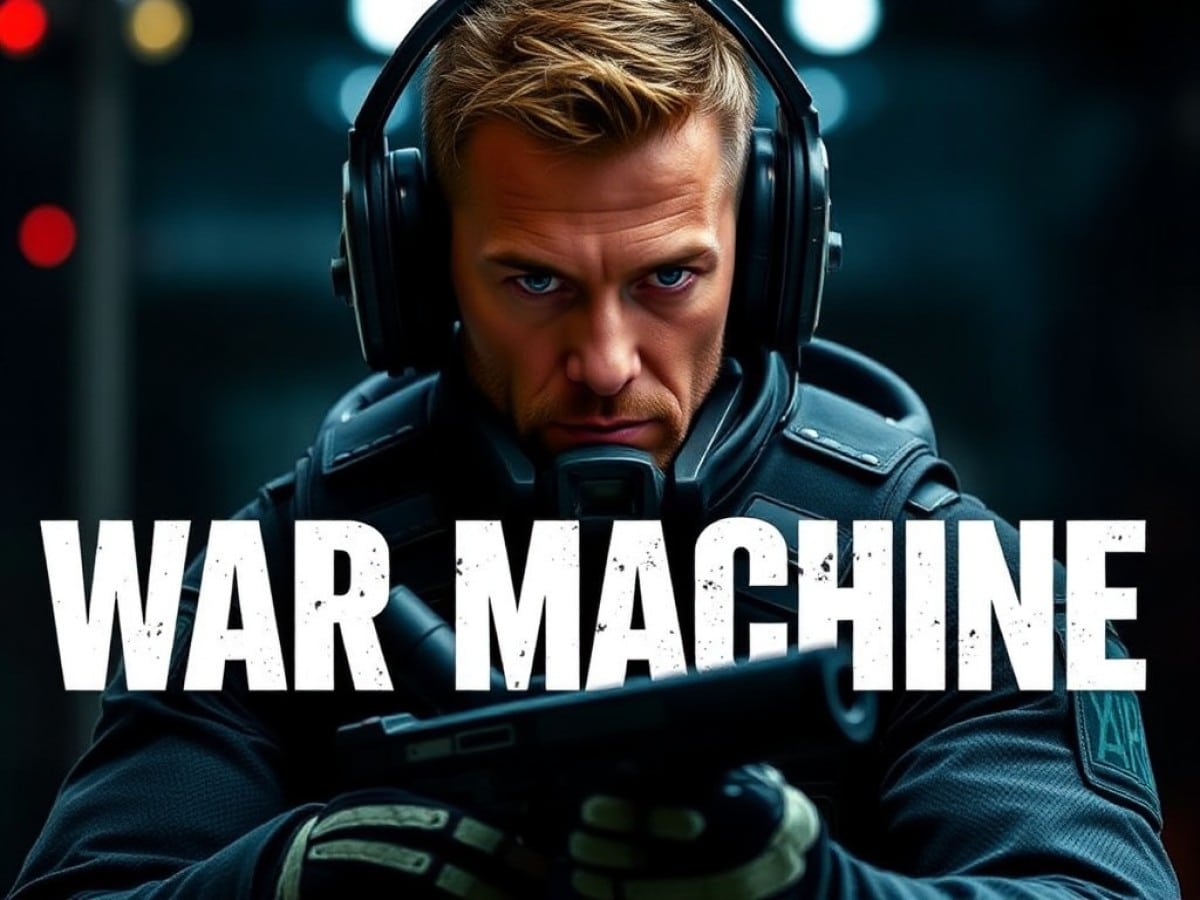
The next installment in the War Machine series has been officially named.
Having premiered on Netflix earlier in the year, the sci-fi action film features Alan Ritchson as a new member in an elite military training program who battles a monstrous robot. The movie quickly became a hit, leading to the green-lighting of War Machine 2, again starring Ritchson.
Patrick Hughes, who directed the original and will return for the sequel, revealed on Instagram that the new film will be titled War Machines. His post included an image highlighting the original War Machine as Netflix’s top movie for the first half of 2026, attracting 147 million views. The image also displayed the sequel’s script cover with a figurine of the war machine positioned above it. See it here:
The decision to pluralize the title seems inspired by the Alien series. Following the success of Ridley Scott’s Alien, James Cameron’s sequel Aliens notably increased the number of creatures. This seems to align with the ending of War Machine, where after defeating a singular robot, Ritchson’s character, known only as 81, discovers that countless more such robots are descending worldwide.
While no specific release date for War Machines has been announced, the existence of a completed script by Hughes and James Beaufort suggests that the wait might not be extensive. Should filming commence next year, we might expect the sequel to premiere on Netflix around 2028.
It remains uncertain which cast members besides Ritchson will return for War Machines. While many of 81’s allies did not survive the first film, actors such as Esai Morales and Dennis Quaid, who played Torres and Sheridan respectively, might reprise their roles.
Although War Machine was a viewership phenomenon, its critical reception was mixed. It holds a moderate 66% rating on Rotten Tomatoes, with an audience score slightly lower at 64%.
ScreenRant‘s review by Alex Harrison, which awarded the film a six out of ten, echoed these sentiments. Harrison appreciated the film’s initial setup, likening it to Predator (1987), but criticized its inability to maintain momentum. He mentioned, “Beyond the initial setup, the film struggles to keep up the pace. The drama of the soldiers battling against the rugged terrain was more engaging than the confrontations with the robot, where the visual effects were less convincing, reducing the immersion. Moreover, the deployment of the robot lacked the inventiveness seen in recent Predator movies. The premise was promising, but the execution didn’t build on it effectively.”
Despite the success of War Machine, the sequel seems poised for significant enhancements, particularly with the increase in robot adversaries, signaling a more intense challenge ahead.

Ava Thornton is an entertainment journalist with a keen eye for the latest in Hollywood, indie films, and streaming trends.
Her work blends insider knowledge with a deep appreciation for storytelling.