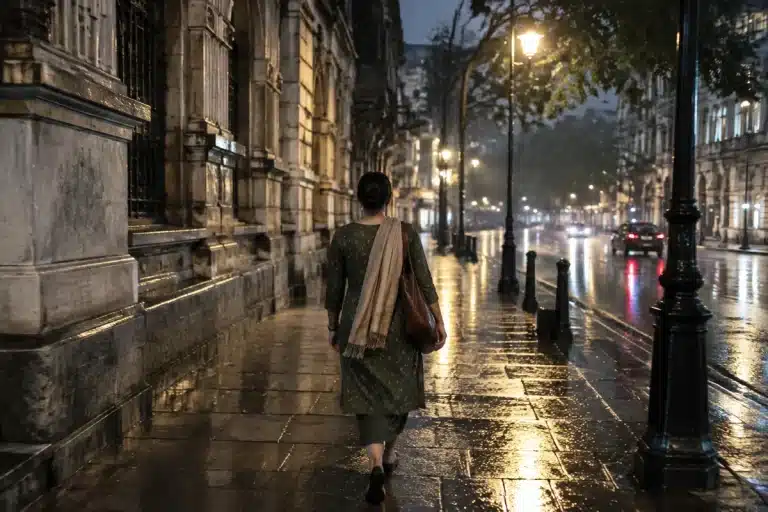
Sometimes a film begins with little more than a bold idea and an unsolicited message on LinkedIn. At 23, Shlok Choudhari left college to pursue filmmaking, making his first short, 3:30. Led by Priyanka Zemse, the black-and-white psychological noir follows a woman moving through Mumbai at the ominous hour named in the title. As medication and memories collide, her sense of danger intensifies. Choudhari drew on two events he had witnessed to examine trauma and the consequences of misdiagnosis.
After screening at the Oscar-qualifying Tasveer Film Festival, the short is set to screen at the Yellowstone International Film Festival in Mumbai. Choudhari and producer Sunil Sadarangani spoke with Deadline about taking risks to make a film, approaching mental health awareness through storytelling, and what they hope to do next.
DEADLINE: This is your first short, and you’re just 23. Shouldn’t you still be in school? What led you to make it?
SHLOK CHOUDHARI: I was 22 when I made it. I was in my second year of college, studying advertising and journalism. I have a lot of respect for journalism, and for the work you do, but I no longer wanted to study it. What I love is movies.
Resilient Films Studios/Tangent Pictures
DEADLINE: I understand.
CHOUDHARI: I grew up watching films, and I still try to watch one every day. Making movies has always been something I wanted to do, but I kept putting it off until I reached a point where I felt I had to take action. I wrote 3:30 and began contacting people on LinkedIn with cold pitches. Sunil was one of the people I approached, as were my executive producer, Jimmy Velarde, and several others. We raised the funds, I recruited a crew through LinkedIn, and we got the film made.
DEADLINE: Sunil, what was your first reaction when this young filmmaker contacted you out of the blue on LinkedIn?
SUNIL SADARANGANI: I do a lot of different things, and LinkedIn has plenty of people pretending to be someone they’re not. When Shlok first messaged me, I wondered, “Who is this person trying to fool me?” His profile photo looked a little suspicious: a distant black-and-white picture of him in a suit. I was thinking, “What’s this about?” But he continued to write to me. [Laughs.] He was persistent, and he spoke about film history, the visual palette, and the noir approach he had in mind. Anyone can pick up information online, but I had a gut feeling that there was something genuine behind it. Then he sent over his presentation, and I was impressed with the way he had assembled it.
He hadn’t made a film before, though. When he told me that, I thought I could offer some guidance about how he was approaching potential crew members and trying to bring the project together. I suggested he put an experienced team together and visit the location he wanted to use so we could see how it might look on camera. He wouldn’t have much time once production began, and the budget was tight.
He was hoping to shoot in South Mumbai, where I’m from. It’s an area that doesn’t often feature in films because security there became very sensitive after the 2008 terrorist attacks. Police patrols and surveillance are still common. Still, his ambition and the distinctiveness of his vision appealed to me. When he returned with footage, I could see the ideas from his presentation working on screen. At that point, I told him I was on board and would be happy to work with him and help however I could.
DEADLINE: Shlok, can you explain some of the challenges you faced shooting in South Mumbai?
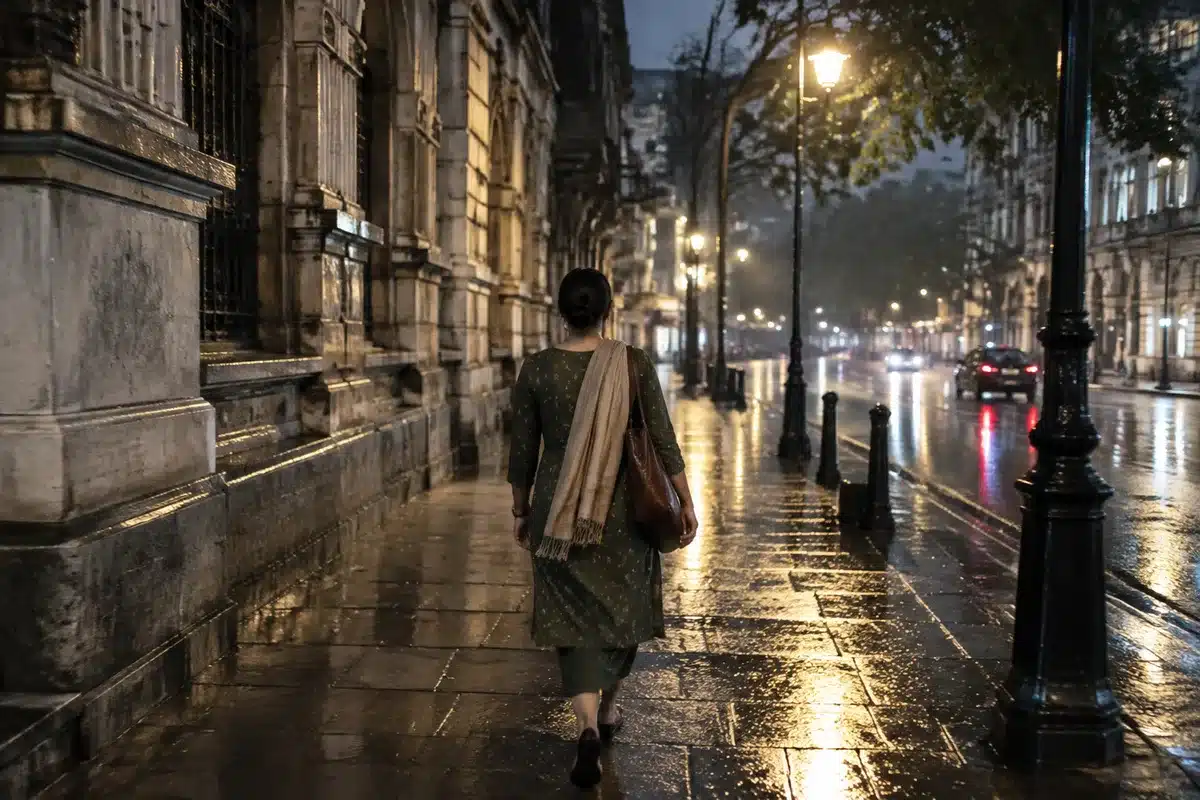
SHLOK CHOUDHARI: There were a lot of things to deal with. I wanted rain-soaked roads with white light reflecting off them. I love the way that looks in black and white, which is why I planned to shoot during monsoon season. I hadn’t realized how challenging that would be. It was also the first time I’d seen a large boom microphone and a full crew with all their equipment and lights. I didn’t know what to expect.

I had imagined going out with my iPhone, and then suddenly there was a whole production crew around me. That attracted attention, and police officers showed up at every location. We had permission, but they still kept checking in. Luckily, my assistant director was good at dealing with them and distracting them while we filmed. Keeping to the schedule in the monsoon was another challenge, but the whole experience was an adventure. In many ways, it became my film school.
DEADLINE: When you realized you didn’t want to continue studying journalism, did you move into filmmaking instead?
CHOUDHARI: I attended Kelkar College in Mumbai, where I studied journalism and advertising, but I didn’t finish the course.
DEADLINE: So you actually left college?
CHOUDHARI: Yes. I dropped out to make this film.
DEADLINE: Were your parents unhappy about that?
CHOUDHARI: They’re happy now. They’re okay with it. [Laughs.]
SADARANGANI: Now that he’s receiving recognition internationally, they’re happy. [Laughs.]
CHOUDHARI: This is my first trip abroad ever, and I’m here in Los Angeles. It feels enormous.
SADARANGANI: He’s never been overseas before, so he’s having a wonderful time in LA.
DEADLINE: You’re taking the story to festivals in different countries. It also touches on sexual abuse and mental health awareness. Can you talk about what inspired 3:30?
CHOUDHARI: The film came out of two real incidents I witnessed. My former girlfriend had been through a deeply traumatic event: she saw her brother kill her father and grandfather, and then take his own life. He had schizophrenia. She was receiving psychiatric care and seeing a psychiatrist every week, but I felt the medication wasn’t helping her. It seemed to bring up more trauma, intensify her hallucinations, and make her feel worse. I would say, “Could it be the medication?” and she would respond, “No, it’s prescribed. It’s written down, so it must be right.” She trusted the authority behind it.
I also had my own mistaken assumptions—the kinds of things you believe at one point and later look back on and wonder how you ever accepted them. The following month, we switched psychiatrists and discovered she had been misdiagnosed. I remember thinking, “That’s fascinating.”
At the same time, I knew a nine-year-old girl who was very close to me. A family friend who lived next door sexually assaulted her. He had a family and a son around my age. She was so young that she couldn’t understand what had happened. The assault was brutal. The police and nurses asked her questions, and that was how we learned the truth. I thought, “This is unbelievable. I have to do something to honor these experiences.” I could have posted about them online, but I wanted to find a way to express them through a story. I thought bringing the two experiences together might make for a story worth telling. That’s how 3:30 came about.
DEADLINE: For viewers, I want to be clear about the film’s message. You’re not saying it’s against medication, are you?
CHOUDHARI: No, not at all. It’s more than a warning story, and its purpose isn’t only to raise awareness. Treatment is available, but psychiatric care can involve trial and error. A psychiatrist may suggest something that helps, or it may not work for you. People should know they don’t have to stay with an approach that isn’t right for them; they can get another opinion. I want the film to build awareness and help people recognize that they might be in a difficult situation, even if they haven’t realized it yet. Treatment can take trial and error. People should absolutely seek psychiatric care and mental health support.
SADARANGANI: Medication can help restore some balance internally, especially for someone who has experienced something like this. But support from other people and professional psychiatric care can also make a difference. Having someone you trust as an anchor can be valuable, particularly for women coping with sexual trauma. The impact can extend to the people around them, too.
CHOUDHARI: I faced a lot of resistance when I began trying to get the film made. I approached people in Mumbai, and some said the subject was too daring. They asked, “How can you make a film about something like this?” They called it unethical and said they wouldn’t support it. Mumbai, and India more broadly, can be conservative. But these things happened. I saw them myself; I didn’t invent them. I stuck to my convictions and kept contacting people until I found Sunil, Betty, Jimmy, Paul, and the rest of my producers.
Resilient Films Studios/Tangent Pictures
DEADLINE: How did Priyanka Zemse come to play the lead?
CHOUDHARI: I met her at a fashion event. She was attending as a guest, so I approached her and asked whether she would consider acting in a film. I explained the subject and asked if she wanted to be involved. It caught her attention, and she eventually agreed, though she didn’t say yes right away.
SADARANGANI: There’s a nice connection there. After Shlok reached out to me on LinkedIn, I started asking him questions in my journalist mode. I asked whether he had someone in mind for the lead role, and he said Priyanka. I’d met her two years earlier at the Tasveer Film Festival in Seattle, where another film of hers was screening. We’d spoken then, so I already knew who she was. It felt like things had come together for a reason.
I also want to acknowledge the women who produced and worked on the film. Our executive producer, Betty J. Butler, was a tremendous source of support, and this kind of abuse is part of her own personal experience. She understood the story and stood by Shlok through the process. It takes a team to bring a film to life, and Betty and the other women on the crew supported and encouraged him. Our editor, Navtika Sharma, did excellent work, and so did our hair and makeup artist, Ronicka Ralph. We had a strong mix of people working on the film.
DEADLINE: You’ve said that black and white was central to your original idea. What drew you to that look, and why did it feel right for this story?
CHOUDHARI: I’ve always loved film noir and wanted to make one myself. I began researching its origins and how the style evolved. I learned about its connection to German Expressionism after the First World War, a movement that brought inner conflicts into the external world. The images were vivid and highly expressive. You can see that in The Cabinet of Dr. Caligari and Fritz Lang’s Metropolis and M. I’m fascinated by mise-en-scène and by the way those films communicated through their visual design. They weren’t trying to break the laws of physics; they built a heightened version of reality. Their themes also reflected the economic and social instability of postwar Germany.
After Hitler came to power, filmmakers such as Billy Wilder and Fritz Lang moved to Hollywood and brought their perspectives with them, helping shape film noir. Noir developed its own concerns, from Cold War tensions and detective stories to subjects that were considered taboo. It’s about more than dramatic shadows and lighting. I asked myself whether noir was the right way to approach a story about misdiagnosis and sexual assault in 2025 or 2026. I decided it was. I’m very grateful to our cinematographer. We became like brothers, and he was both talented and experienced. I’m glad he chose to work with me.
DEADLINE: How has the film’s journey through festivals been so far?
SADARANGANI: Along with the Tasveer South Asian Film Festival in Seattle, we were selected for the City of Angels Film Festival in Los Angeles, where we received the Best Feminist Film award.
DEADLINE: As a male director, what was it like to receive that particular award?
SADARANGANI: I think the award was connected to the film’s subject. Lisa K. Crosato, the festival’s founder and director, was moved by the story Shlok told in 3:30. The festival used to be called the City of Angels Women’s Film Festival and was dedicated to championing women’s stories and women filmmakers. Lisa felt a strong connection to the subject, and that’s how we came to receive the award.
DEADLINE: Shlok, what do you hope to work on next?
CHOUDHARI: I’d like to make another short, and I’m developing a feature film as well. Both are personal stories; they have to come from a personal place. I write every day. So far, it feels as if the universe, or some kind of force, has been helping me. I feel fortunate. I’m moving forward one step at a time, but I’m clear about what I want to do next.

Daniel Hayes is a business journalist with a focus on market trends, startups, and corporate strategies.
His sharp analysis and investigative reports make complex financial topics accessible to all readers.