British cinematographer Ben Davis had just finished photographing Bradley Cooper’s Ocean’s Eleven prequel when he arrived at the ToruńCamerimage Film Festival in Poland to speak about Wild Horse Nine, his newest collaboration with writer-director Martin McDonagh.
The film — the fourth project Davis and McDonagh have made together — features Sam Rockwell and John Malkovich and was filmed on the isolated shoreline of Easter Island, roughly 2,330 miles west of mainland Chile.
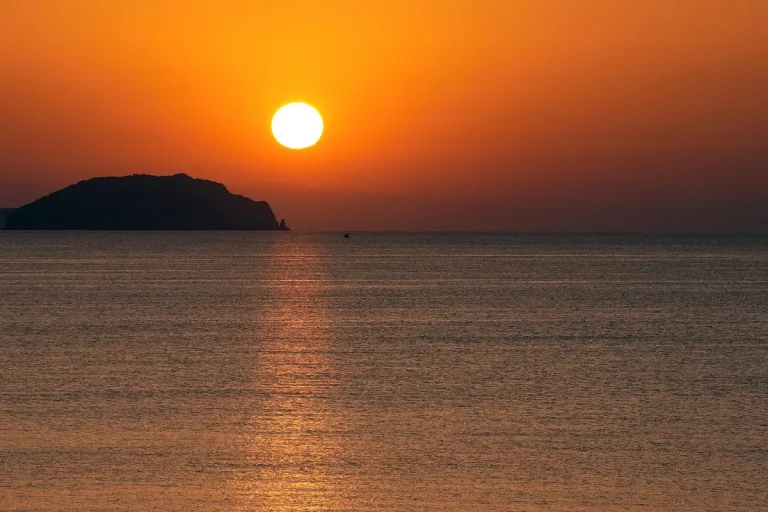
Davis says he was not entirely new to the location: he had visited the island in 1999 to shoot a brief piece marking the millennium, so he already had a sense of the place. He describes Easter Island as a strange but breathtaking environment, one that defies easy description. With its cleared landscapes and the iconic Moai statues gazing out over the sea, the island offers a constant, uninterrupted horizon and an acute sense of solitude — qualities that appealed to McDonagh, who often places his characters in situations of isolation.
Wild Horse Nine, which screened at ToruńCamerimage earlier in the week, follows CIA operatives Chris (Rockwell) and Lee (Malkovich). The two are dispatched from Santiago to Easter Island just before the 1973 military coup in Chile. As the pair contend with buried memories and unfolding conspiracies, Chris forms an unexpected connection with two students that threatens to derail the mission. The cast also includes Steve Buscemi and Parker Posey.
For Davis, the island’s visual splendor was integral to the film. His character work shows Chris nearing the twilight of his life, becoming acutely aware of the world’s beauty and the things he will soon leave behind — an emotional thread that the location helps to underline. Placing the characters in that landscape, Davis says, made the island’s loveliness almost tangible on screen, and that quality was something they worked hard to achieve.
Since McDonagh’s scripts are heavily driven by character and dialogue — often featuring extended exchanges between two people — Davis felt it important to create visual counterpoints that open the frame and give the audience a sense of space whenever the film moves away from those intimate conversations. He wanted a visual rhythm that complemented the language of the script.
In shaping the movie’s look, Davis drew heavily on the photography of William Eggleston and Stephen Shore, studying images from that era during prep. Two Eggleston photographs in particular struck him, and he shared those images with McDonagh, who responded positively. Davis admired Eggleston’s work on Ektachrome in the 1970s for its saturated, vivid colors, and he was interested in capturing some of that Ektachrome character for the film.
Kodak Ektachrome is a reversal (slide) film stock known for its fine grain, clean, lively colors and tendency toward cooler tones. However, several practical challenges made shooting on true Ektachrome difficult: McDonagh preferred shooting on film, but Ektachrome was available only in 16mm, and Davis was not keen on that format. More importantly, processing film on a remote island presented logistical headaches — getting footage to a lab and back could take a week or more.
During an early location scout Davis shot stills on Ektachrome and ran some Super 8 Ektachrome tests, along with video samples. After reviewing those materials, the team decided on a hybrid approach. Ultimately, principal photography was captured on an ARRI Alexa 35, while the Ektachrome stills served as color and mood references throughout the shoot. The finished film also incorporates Super 8 footage — a narrative device, since Rockwell’s character Lee carries a Super 8 camera and records small moments during the story.
Davis explains that Super 8 carries a particular nostalgic quality: its motion and image texture give the impression of watching memories rather than straightforward footage. The team embraced that feel, increasingly incorporating Super 8 material as production progressed.
Having now completed four films with McDonagh, Davis says their working relationship has settled into a dependable shorthand. Their rapport extends beyond professional collaboration — they’re friends as well as creative partners — and that familiarity has allowed them to understand each other quickly and consistently over multiple projects.
ToruńCamerimage ran from November 7–14, 2026.

Daniel Hayes is a business journalist with a focus on market trends, startups, and corporate strategies.
His sharp analysis and investigative reports make complex financial topics accessible to all readers.