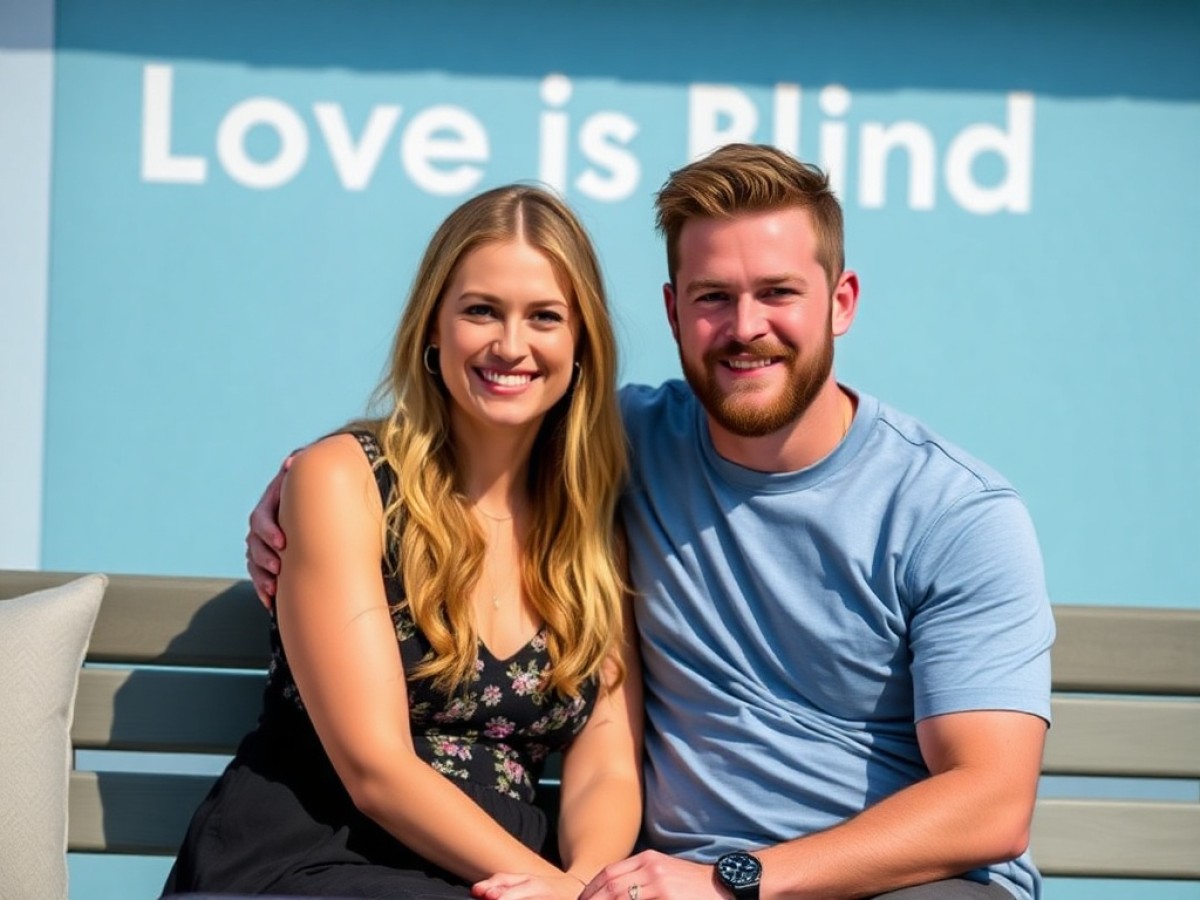
EXCLUSIVE: Contestants from Love is Blind: UK have voiced concerns that the show’s welfare staff may be too closely aligned with production teams, potentially compromising the well-being of the participants.
Catherine Richards and Jake Singleton-Hill, participants from the first season of Love is Blind: UK, have openly criticized their treatment on the show amid a broader debate on the welfare practices in British reality TV. This discussion has intensified following troubling allegations from the cast of Married at First Sight.
Recently, BBC News highlighted accusations from two women on the UK edition of Married at First Sight who claimed they were sexually assaulted during the production on Channel 4, with a third woman alleging another serious sexual misconduct incident.
Despite these allegations, Channel 4 maintains that their welfare protocols are robust, though they have initiated two separate investigations to reassess these procedures. All accused individuals have denied these allegations. Both Married at First Sight and Love is Blind: UK are produced by CPL Productions.
After watching the BBC’s expose on Married at First Sight, Richards felt compelled to disclose that welfare staff on Love is Blind had shared confidential information about her with the show’s producers, which she believes was then used to shape the show’s narrative against her consent.
“We’re just marionettes to them,” Richards expressed to Deadline. “They mention welfare support, but it’s all for show. They ultimately serve the production’s needs for engaging content.”
According to Netflix and CPL, it is standard practice on Love is Blind for the welfare team to alert producers about any significant issues. They also provide access to therapy for participants to discuss their experiences confidentially.
A spokesperson from CPL stated, “We have strict guidelines that ensure a clear separation between production-related welfare concerns, which we escalate as needed, and the confidential psychological support that remains completely independent.”
Richards recounted an incident where she confided in a welfare worker about a dispute with her co-star, Freddie Powell. Shortly afterward, filming crews arrived at their residence in Camden, London, which she felt was a direct breach of her privacy.
“I was by the canal in Camden, refusing to speak because I knew they wanted to turn my situation into another plot twist. I had approached the welfare team for support, not to generate scandalous content,” she explained.
Netflix and CPL countered that the filming crew visited Richards only the following day and with her consent, which Richards disputes, maintaining her account of the events as accurate.
Singleton-Hill, now Richards’ partner, echoed her sentiments: “It feels like the welfare team pretends to provide a safe space, only to use what you say against you. It’s a toxic setup not designed to support participants but to create sensational television.”
Richards argues for a restructuring of welfare services in reality TV, advocating for a system where welfare staff are completely independent of the production team, thus protecting participant confidentiality and integrity.
In response to inquiries about potentially revisiting their welfare policies, a Netflix representative reassured, “The safety and mental health of our participants are our top priorities. We are committed to enforcing the most thorough and effective measures and are always looking to enhance our protocols where possible.”
‘Love is Blind’ Aftercare
Richards, who was dramatically rejected at the altar by Powell, spoke about feeling devastated and humiliated, a low point prominently featured in the show’s eleventh episode. She critiqued the post-show support as superficial and ultimately sought private therapy to cope with her distress.
Singleton-Hill also resorted to private counseling. Despite receiving threats online, Richards felt that the production’s response was dismissive at best.
A CPL spokesperson defended their approach: “We ensure comprehensive safeguarding through thorough background checks, daily welfare monitoring on set, and continuous support during and after the show’s airing. This standard practice is independently managed and adheres strictly to established care duties.”
A Netflix spokesperson added, “Our participants benefit from regular check-ins by dedicated welfare teams and independent psychologists, with escalating support depending on the issues faced.”
‘Stranded on Honeymoon Island’ Experience
Taniae Wong, another contestant from a CPL-produced show, voiced similar concerns about the genuine independence of welfare support during filming, suggesting a conflict of interest given their payment structures.
Sharon Gaffka, formerly of Love Island, criticized the embedded nature of welfare teams within production units in an article for The Guardian. She argued for a reformation where safeguarding is managed by an external, authoritative body, separate from the production team.
Wong, who experienced significant mental health challenges post-filming, eventually received funded therapy but felt that it required excessive advocacy on her part. Despite this, she acknowledged the effectiveness of the support once it was granted.

Daniel Hayes is a business journalist with a focus on market trends, startups, and corporate strategies.
His sharp analysis and investigative reports make complex financial topics accessible to all readers.