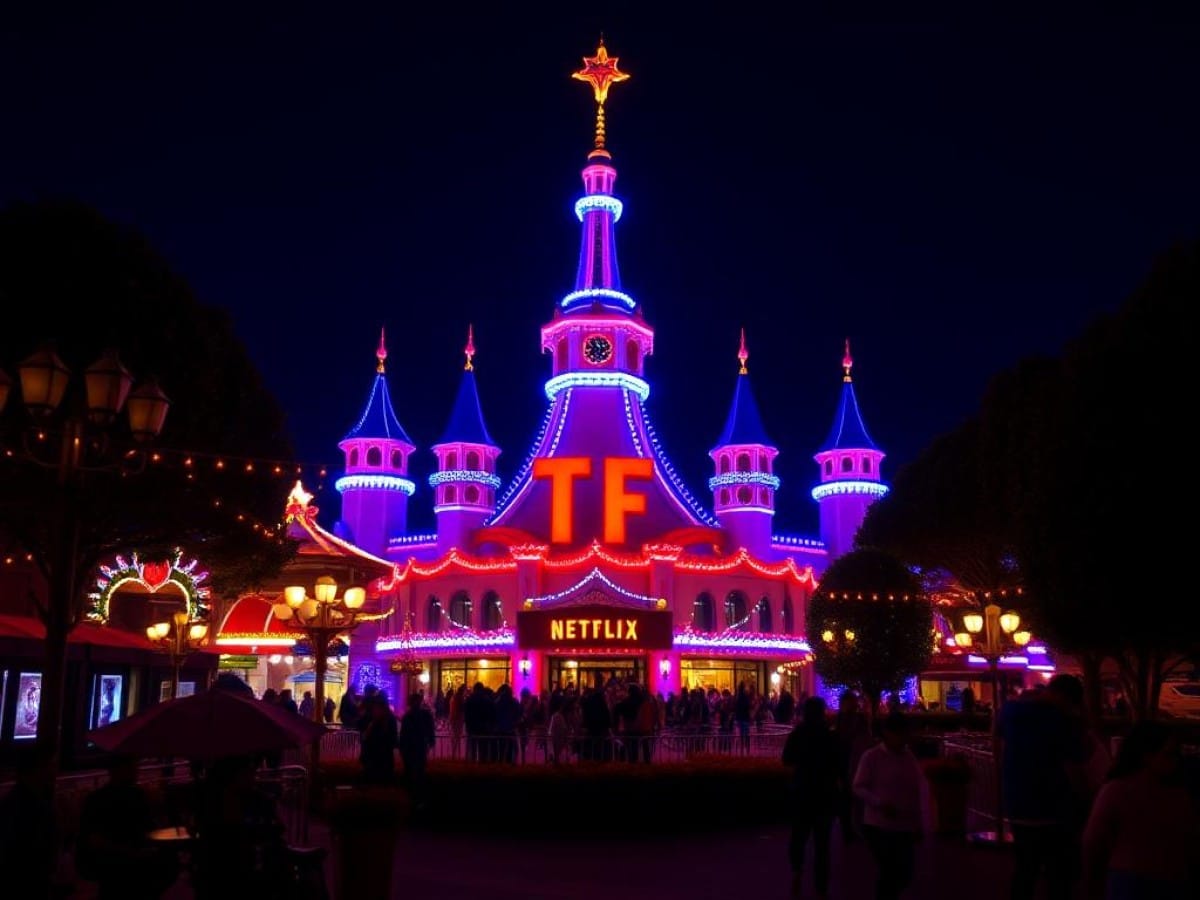
Exploring the Possibility of Netflix Entering the Theme Park Arena
Netflix, the streaming giant known for its extensive library of films and series, might consider a venture into the theme park industry. This idea isn’t too far-fetched considering the success of themed attractions based on popular media content by other companies. However, there are specific reasons why Netflix has not yet made this leap.
The Potential for Netflix-Themed Amusement Parks
The concept of a Netflix theme park builds on the idea of expanding its brand beyond digital screens. By creating immersive experiences based on its original content, Netflix could offer new forms of entertainment that enhance its brand’s visibility and appeal. Picture walking through a recreation of the Hawkins, Indiana, from “Stranger Things” or visiting the royal courts depicted in “The Crown.”
Other major companies like Disney and Universal Studios have long capitalized on their storytelling by crafting theme parks that physically immerse visitors in their fictional worlds. These ventures have proven to be highly successful, serving as both a source of significant revenue and a marketing tool that keeps audiences engaged with the brand.
Challenges Netflix Faces
Despite the potential benefits, several factors likely deter Netflix from diving into the theme park business. First and foremost, the financial investment required for building and maintaining a theme park is colossal. Unlike its current model, which primarily involves digital content, theme parks require continuous physical maintenance, staffing, safety checks, and updates to keep the attractions fresh and exciting.
Furthermore, the theme park industry is highly competitive, with well-established players like Disney and Universal dominating the market. These companies not only have decades of experience in managing theme parks but also have the advantage of extensive libraries of universally recognized characters and stories that naturally lend themselves to themed attractions.
Another significant consideration is the nature of Netflix’s content. Much of its library consists of shows and movies that are licensed from other creators, which could complicate the usage rights for theme park attractions. Securing the rights to use these properties in a park setting involves complex negotiations and potentially high costs.
Why Netflix Hasn’t Made the Jump Yet
Given the challenges outlined, Netflix has likely concluded that the risks and costs associated with entering the theme park industry outweigh the potential benefits at this stage. The company is currently focusing on expanding its presence in the digital entertainment space, where it has established dominance and expertise.
Moreover, the global pandemic has had a substantial impact on the theme park industry, demonstrating the kinds of external risks that can affect such a heavily investment-dependent business. This situation may have further discouraged Netflix from making such a large-scale move during uncertain times.
Future Possibilities
While Netflix has not yet ventured into theme parks, the future could hold different possibilities. As the company continues to grow and diversify its content offerings, it might find innovative ways to blend digital and physical entertainment experiences. Collaborations or partnerships with existing theme park operators could be a more feasible way for Netflix to test the waters without the enormous initial investment of building a park from scratch.
In conclusion, while the idea of a Netflix theme park is intriguing and holds certain appeal, practical considerations and market conditions have so far kept this concept in the realm of speculation. As the landscape of entertainment continues to evolve, however, new opportunities may emerge for Netflix to explore this exciting avenue.

Ethan Caldwell is a seasoned journalist specializing in world affairs and international relations.
With over a decade of experience covering geopolitical events, he brings sharp analysis and in-depth reporting to Urimuri.